Tulsa attics face extreme swings between warm humid summers that drive moisture into roof decks and cold winters that push heat loss through uninsulated ceilings. Spray foam creates an air and vapor barrier that handles both, but installers must account for the frequent severe thunderstorms that dump heavy rain and can push water under eaves in neighborhoods like Cherry Street and Brookside. Older homes in Maple Ridge and Greenwood often have knob-and-tube wiring or plaster ceilings that require careful prep before foam is applied.
In Tulsa County, many homes built before 1970 have shallow attics with limited access and existing batts that have settled or become damp from roof leaks near the Pearl District and Utica Square. Spray foam adheres directly to roof sheathing and rafters, sealing gaps that fiberglass cannot reach, yet crews must still maintain proper ventilation paths around ridge vents and soffits to avoid trapping moisture during Oklahoma's humid months. Edge cases include cathedral ceilings in Bixby and Jenks where closed-cell foam thickness must be calculated to prevent condensation on the underside of the roof deck.
Local building practices in Owasso and Broken Arrow require attention to fire-rated separation in attached garages and proper ignition barriers when foam is left exposed in attics. Technicians routinely check for bathroom and kitchen exhaust fans that terminate in the attic rather than through the roof, a common source of humidity in Downtown Tulsa and Greenwood homes. Proper sequencing—air sealing first, then foam—prevents the foam from covering over leaks that would otherwise cause rot after the next thunderstorm season.
Technician insight
In Tulsa, the thing that catches most people out with Attic Insulation is how quickly summer humidity and thunderstorm moisture get trapped once old batts are disturbed in homes around Greenwood and the Pearl District; if you do not address bathroom fans venting into the attic first, the new foam ends up sealing in the problem instead of fixing it.
Attic Insulation Maple Ridge Home
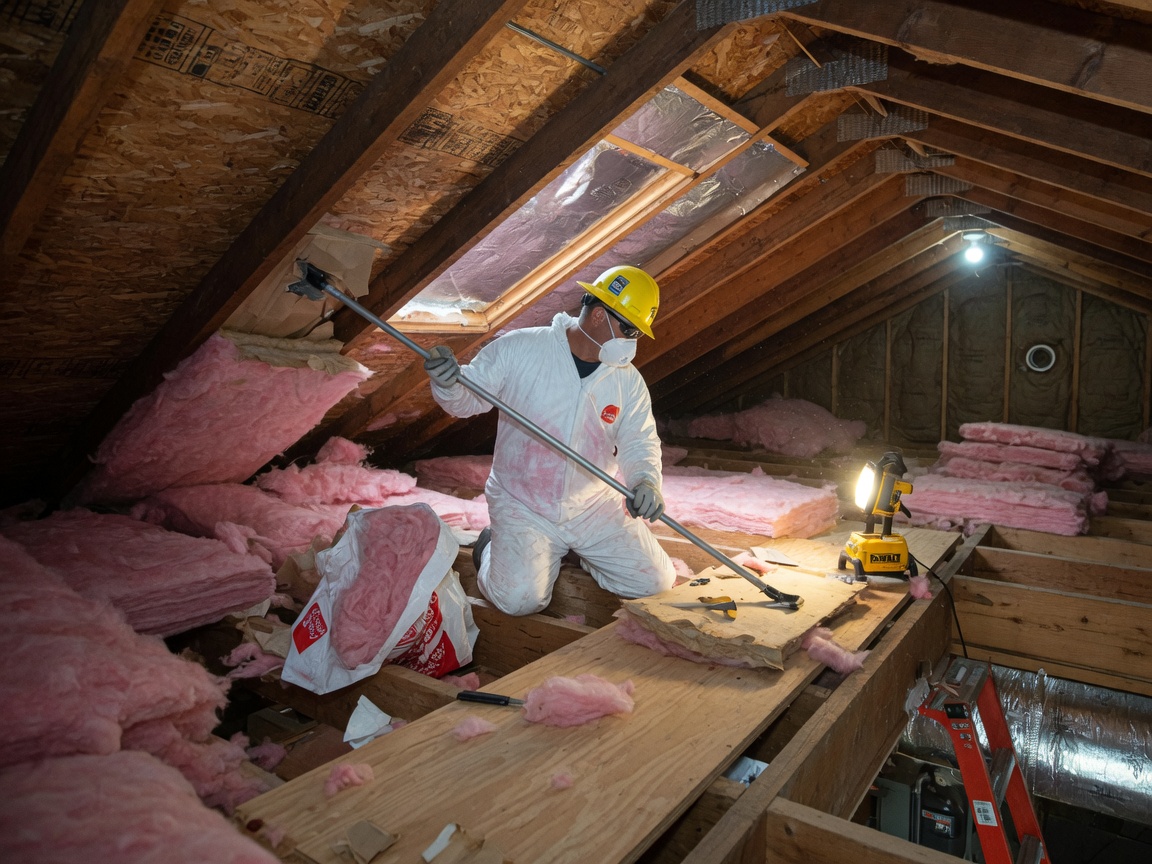
Homeowner in Maple Ridge noticed higher summer cooling bills and musty smells after heavy spring rains. Inspection showed settled fiberglass and bathroom exhaust terminating in the attic. Crew removed damp insulation, sealed the fan duct through the roof, then applied closed-cell foam to the deck. Humidity levels dropped and the attic stayed dry through the next thunderstorm season.
Attic Insulation Services We Offer
✓Attic Spray Foam Installation
Closed-cell spray foam applied directly to roof deck and rafters to seal air leaks and add insulation value in one step.
✓Existing Insulation Removal
Safe extraction of old batts or blown cellulose that has absorbed moisture from Tulsa thunderstorms before new foam is installed.
✓Attic Air Sealing
Targeted sealing of penetrations around recessed lights, plumbing stacks and wiring chases common in Maple Ridge and Cherry Street homes.
✓Moisture Assessment and Control
Inspection for roof leaks and bathroom exhaust issues that drive humidity into attics during humid summers in Tulsa County.
✓Ridge and Soffit Ventilation Coordination
Ensuring foam application does not block airflow paths needed to manage moisture in attics across Jenks and Bixby.
Attic Insulation Cost in Tulsa, OK
| Service | Typical Range | What Affects It |
|---|---|---|
| Small Attic (under 800 sq ft) | $1,400–$2,200 | Single-story homes in Cherry Street or Brookside with easy access |
| Medium Attic (800–1,400 sq ft) | $2,100–$3,600 | Two-story homes in Jenks or Bixby with existing insulation removal |
| Large Attic (1,400+ sq ft) | $3,400–$5,800 | Older Maple Ridge or Greenwood homes with multiple access points |
| Attic Air Sealing Add-On | $350–$650 | Extra when heavy penetrations around lights and ducts are present |
Ranges are typical for Tulsa, OK and confirmed with an exact written quote before any work starts.
How it works
- 1
Site Evaluation
Technician inspects attic access, existing insulation condition, wiring and moisture signs in the specific Tulsa neighborhood.
- 2
Preparation and Air Sealing
Remove damaged insulation, seal gaps around pipes and lights, and protect fixtures before foam application.
- 3
Spray Foam Application
Apply closed-cell foam to roof deck and walls at required thickness while maintaining ventilation paths.
- 4
Final Inspection and Cleanup
Check for complete coverage, trim excess foam, and verify no blockages to ridge or soffit vents.
Pricing
Pricing depends on attic size, access difficulty and condition of existing insulation; quotes provided after on-site visit from our location at 6549 E 46th St.