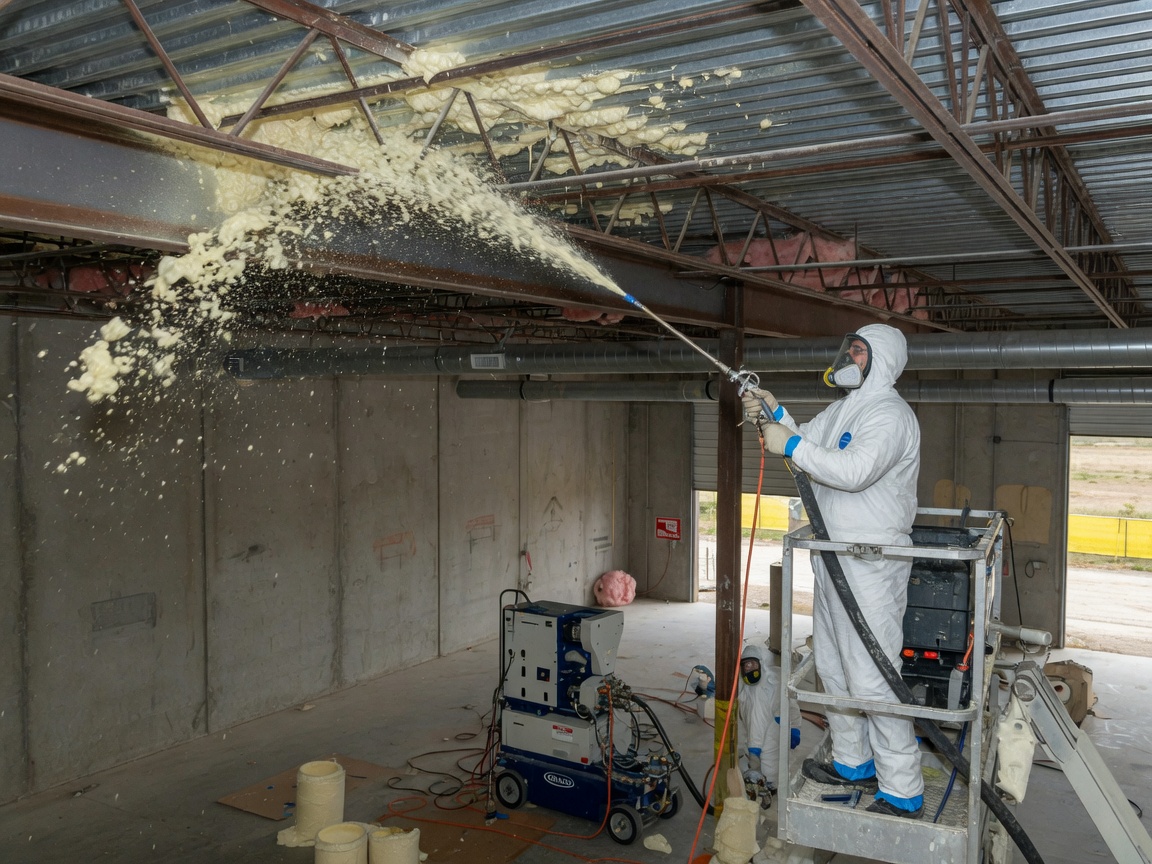
Tulsa commercial properties in older stock like those near Greenwood or the Pearl District often have metal roofs and masonry walls that sweat heavily during humid summers. Closed-cell spray foam creates a continuous air seal and adds structural rigidity while managing vapor drive from frequent thunderstorms. Open-cell foam is sometimes used in conditioned interior spaces where sound control matters more than R-value per inch.
In Bixby and Jenks industrial parks, we see tilt-up concrete warehouses with large roof decks that lose heat fast once winter temperatures drop. Proper thickness and lift scheduling prevent shrinkage cracks during rapid weather changes. We always check for existing mechanical penetrations and roof drains before starting, because blocked drainage during a spring storm can turn a foam job into a water intrusion problem.
Tulsa County energy codes require minimum insulation values on new commercial builds and major renovations. Spray foam meets those targets in one pass but demands careful masking around HVAC units and fire-rated assemblies. In Maple Ridge office buildings we often combine roof deck insulation with wall cavity work to stop thermal bridging at the parapets.
Edge cases include retrofits over existing batts in Cherry Street retail spaces where moisture trapped behind the old material can lead to mold if not removed first. We pull permits through the City of Tulsa when the project scope triggers them and coordinate with the electrical contractor on conduit locations to avoid future service calls.
Technician insight
In Tulsa the thing that catches most people out with commercial spray foam is the rapid temperature swings between humid afternoons and cold nights that can cause condensation on metal decks if the foam thickness is under-specified. We see this most often on older warehouses near Route 66 Historical Village where roof drains are already marginal during thunderstorms.
Bixby Manufacturing Plant Roof Upgrade
A 1980s tilt-up warehouse in Bixby showed persistent summer condensation on the metal deck. We found the original batts were saturated from roof leaks during spring storms. We removed the wet material, applied closed-cell foam to the deck, and tied it into the wall insulation. The plant reported stable interior humidity and lower cooling loads the following summer.
Commercial Spray Foam Insulation Services We Offer
✓Warehouse Roof Deck Insulation
Closed-cell foam applied directly to metal or concrete decks in Tulsa industrial buildings to cut energy loss and control condensation during humid summers.
✓Office Building Wall Retrofit
Interior or exterior spray foam upgrades for commercial offices in Downtown Tulsa and Utica Square that improve comfort and reduce HVAC runtime in cold winters.
✓Retail Space Ceiling Insulation
Open-cell foam installed above drop ceilings in Cherry Street and Brookside storefronts to lower sound transmission and stabilize temperatures year-round.
✓Manufacturing Facility Insulation
High-density closed-cell applications in Owasso and Broken Arrow plants that seal large openings and protect equipment from temperature swings and storm-driven moisture.
✓Medical Office Building Insulation
Vapor-closed foam systems for Tulsa County clinics that maintain stable humidity levels critical for equipment and patient comfort.
Commercial Spray Foam Insulation Cost in Tulsa, OK
| Service | Typical Range | What Affects It |
|---|---|---|
| Warehouse roof deck | $1.80–$2.60 per sq ft | Closed-cell, 2-inch minimum; higher for steep or obstructed roofs common in Tulsa industrial parks |
| Office wall retrofit | $2.10–$3.00 per sq ft | Includes removal of old material in older Downtown Tulsa buildings |
| Retail ceiling application | $1.50–$2.20 per sq ft | Open-cell in conditioned spaces; price rises with height and fixture density |
Ranges are typical for Tulsa, OK and confirmed with an exact written quote before any work starts.
How it works
- 1
Site Assessment
We inspect the commercial structure, roof condition, and existing insulation in areas like Jenks or Bixby to identify moisture risks and code requirements.
- 2
Material and Thickness Planning
We select closed-cell or open-cell foam and calculate lift thickness based on Tulsa County energy code targets and the building's exposure to thunderstorms.
- 3
Preparation and Masking
All mechanicals, drains, and fire-rated assemblies are protected before spraying begins on the scheduled day.
- 4
Application and Ventilation
Foam is applied in controlled lifts with proper cure time between passes, followed by ventilation to clear any off-gassing.
- 5
Final Walk-Through
We verify coverage, trim excess, and review the finished work with the building manager.
Pricing
Pricing depends on square footage, access difficulty, and whether existing insulation must be removed.