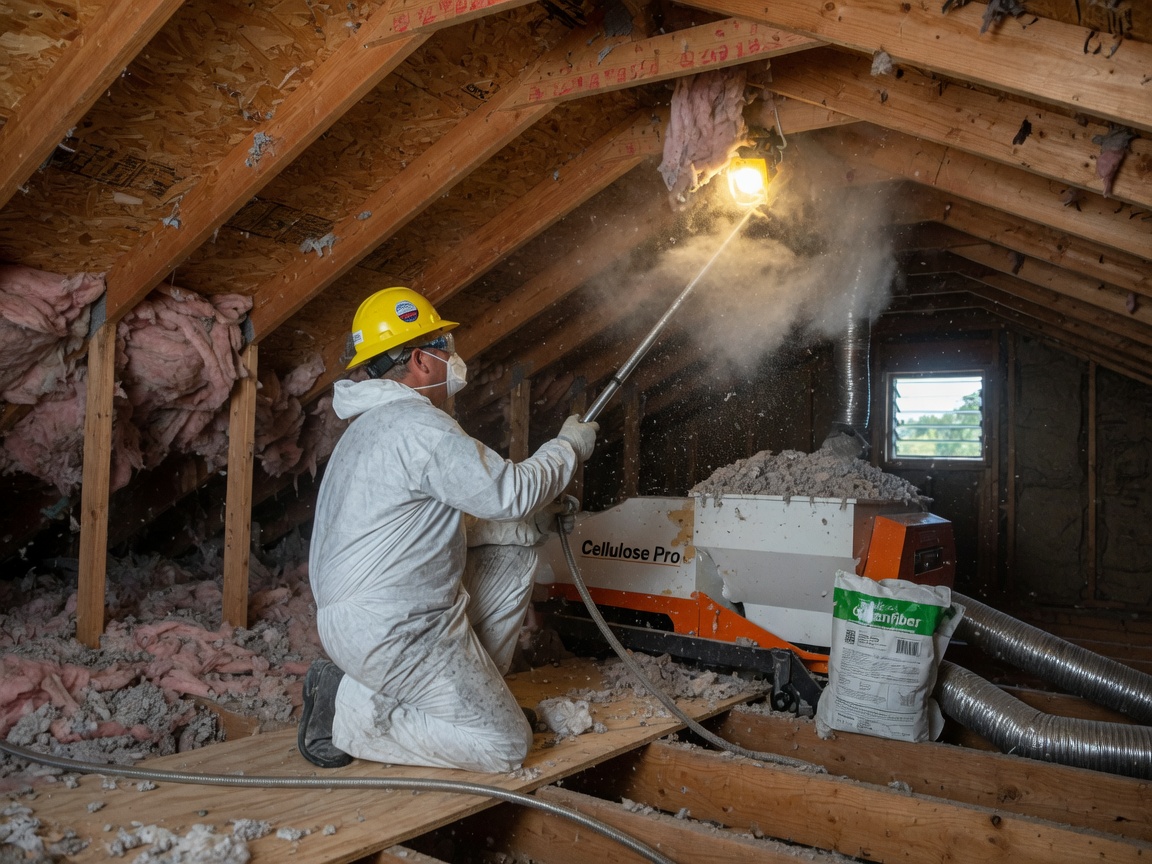
Tulsa's housing stock from the early 1900s through the 1960s in areas such as Maple Ridge, Greenwood, and the Pearl District often features balloon-framed walls and shallow attics with limited access points. Blown-in cellulose or fiberglass fills these cavities without major demolition, but crews must watch for knob-and-tube wiring remnants and knobbed plaster that can shift during installation. Warm humid summers drive condensation risks inside roof decks, so proper baffles and ventilation checks prevent moisture buildup that thunderstorms accelerate.
Cold winter nights in Tulsa County push heat loss through uninsulated attics in homes near Utica Square and Woodward Park. Blown-in material settles over time, especially when heavy rain events saturate roof leaks that go unnoticed until insulation clumps. Technicians working from the 6549 E 46th St shop typically pull back existing batts first, check for rodent damage common in Cherry Street bungalows, then blow to consistent depth while preserving existing ridge vents.
Nearby cities like Broken Arrow, Owasso, Bixby, and Jenks share similar stock but add newer tract homes with truss roofs that require different hose angles and density settings. Frequent severe thunderstorms mean crews pause jobs when winds exceed safe ladder limits and always verify that blown material stays dry during multi-day projects. This attention to local weather windows and older-home details keeps performance steady through Tulsa's temperature swings.
Homeowners in Downtown Tulsa lofts and Route 66 Historical Village cottages frequently request blown-in upgrades when converting unused space. The process respects historic details while meeting current Tulsa County energy code minimums for attic R-values. Proper prep includes sealing can lights and exhaust fans so insulation does not migrate into living areas during high-pressure blowing.
Technician insight
In Tulsa, the thing that catches most people out with Blown-In Insulation is how quickly summer humidity and sudden thunderstorms turn small roof leaks into soaked cellulose that must be fully removed before new material goes in, especially in Maple Ridge and Cherry Street attics where access is tight.
Settled Attic In Maple Ridge Bungalow
Homeowner noticed higher summer cooling bills in a 1920s Maple Ridge house. Assessment showed settled cellulose and blocked soffit vents from prior roof work. Crew removed damp material, installed new baffles, and blew fresh cellulose to code depth. Utility bills dropped and no further moisture issues appeared after the next thunderstorm season.
Blown-In Insulation Services We Offer
✓Attic Blown-In Insulation
Fills Tulsa attics with cellulose or fiberglass to reduce summer heat gain and winter heat loss in older homes.
✓Wall Cavity Blown-In Insulation
Injects material into empty exterior walls common in Maple Ridge and Greenwood bungalows without removing plaster.
✓Knee Wall and Bonus Room Insulation
Insulates finished bonus spaces above garages in Jenks and Bixby homes where standard batts leave gaps.
✓Cathedral Ceiling Blown-In
Adds insulation to vaulted ceilings in Brookside and Cherry Street properties while preserving ventilation channels.
✓Existing Insulation Top-Off
Restores settled material in attics across Owasso and Broken Arrow after storm-related moisture issues.
Blown-In Insulation Cost in Tulsa, OK
| Service | Typical Range | What Affects It |
|---|---|---|
| Standard Attic Top-Off | $1,200–$2,800 | Varies with square footage and existing insulation depth in single-story Tulsa homes |
| Full Attic Replacement | $2,500–$5,500 | Higher in two-story homes near Gathering Place or Philbrook with limited access |
| Wall Cavity Injection | $1,800–$4,200 | Depends on linear feet and plaster condition in pre-1950 neighborhoods |
| Bonus Room Insulation | $900–$2,100 | Smaller jobs in Jenks or Bixby often land on the lower end |
Ranges are typical for Tulsa, OK and confirmed with an exact written quote before any work starts.
How it works
- 1
Site Assessment
Inspect attic access, wiring, and ventilation in the specific Tulsa neighborhood home.
- 2
Prep And Sealing
Block can lights, seal penetrations, and protect living spaces from dust.
- 3
Material Blowing
Install blown-in to target depth while monitoring for even coverage.
- 4
Final Check
Verify R-value, ventilation clearance, and clean-up before leaving the site.
Pricing
Costs depend on attic size, access difficulty, and material chosen; quotes provided after on-site visit during business hours.