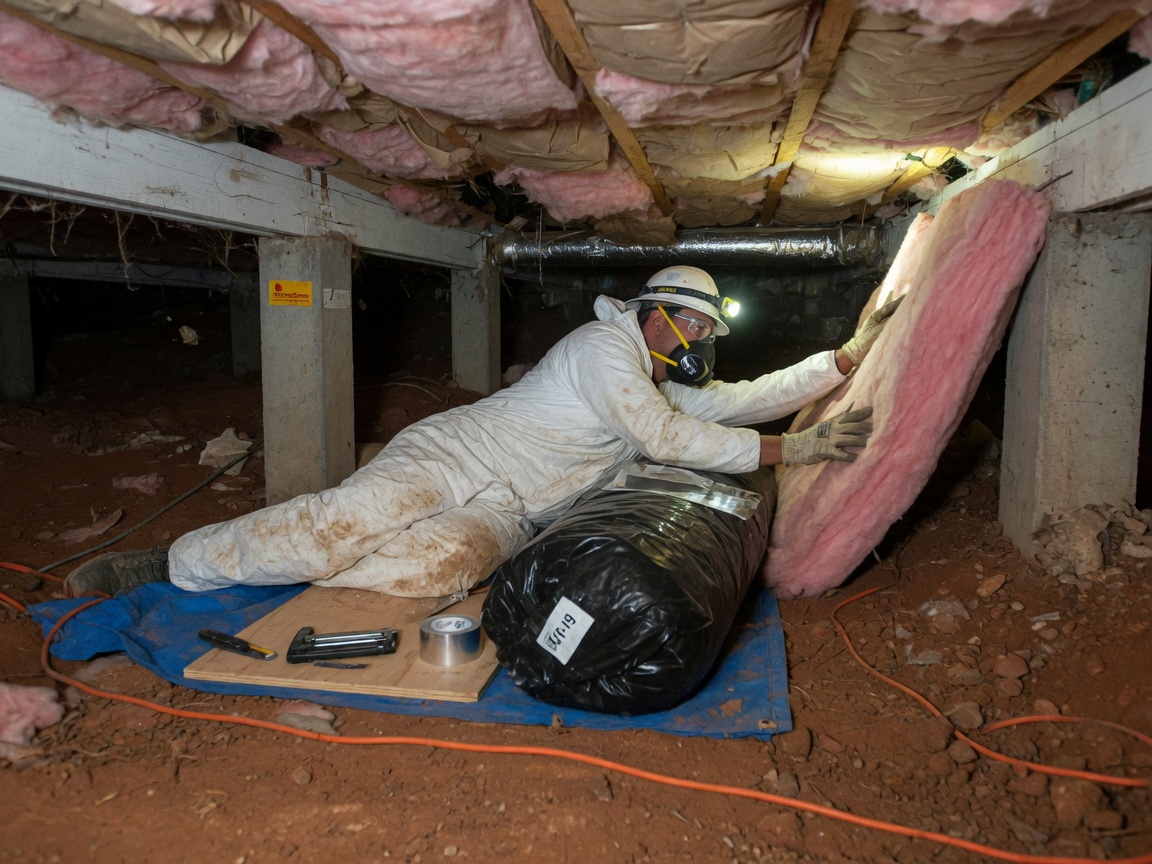
Tulsa County homes built before 1980 in neighborhoods like Maple Ridge and Greenwood often sit on pier-and-beam foundations with vented crawl spaces that pull in humid air during warm summers and allow cold drafts in winter. Closed-cell spray foam applied to the underside of the floor decking and rim joists creates an air and vapor barrier that stops condensation on pipes and subflooring while adding structural rigidity. Severe thunderstorms common from April through June can push groundwater higher around foundations in low-lying areas near the Arkansas River, so we always inspect for standing water and recommend a vapor barrier on the dirt floor before foaming begins.
In newer subdivisions around Jenks and Bixby, crawl spaces frequently have HVAC equipment and ductwork running through them. We mask and protect those lines, then apply two-inch minimum closed-cell foam to the band board and floor joists to keep conditioned air from leaking into the unconditioned space below. Homeowners in Cherry Street and Brookside report noticeably lower energy bills after the work because the foam stops the stack effect that pulls cold air through gaps around plumbing penetrations during January freezes.
Edge cases we see regularly include termite-damaged joists in older Utica Square properties and tight access under homes in the Pearl District where only 18 inches of clearance exists. In those situations we use a smaller proportioner and hand-held sprayers to reach the rim without overspray onto electrical boxes or insulation already present on pipes.
Tulsa building codes require a minimum R-19 in crawl spaces for new work, but most retrofits exceed that with 2 inches of closed-cell foam delivering R-13 plus the air-sealing benefit that code inspectors recognize when homes are being sold or permitted for additions.
Technician insight
In Tulsa the thing that catches most people out with Crawl Space Insulation is how quickly humid air from June thunderstorms condenses on uninsulated rim joists in Maple Ridge and Greenwood homes built in the 1940s and 1950s; once you see black mold starting on the band board you know the foam has to go on before another wet season hits.
Bixby Crawl Space With Standing Water
A 1990s home in Bixby had cold floors and musty smells after spring storms. We found pooled water near the foundation and uninsulated ducts dripping. After installing a vapor barrier and closed-cell foam on the floor and rim, the homeowner reported dry air and warmer floors within two weeks.
Crawl Space Insulation Services We Offer
✓Crawl Space Encapsulation
Full vapor barrier installation on dirt floors combined with closed-cell foam on walls and rim joists to create a conditioned, dry crawl space.
✓Underfloor Spray Foam Insulation
Direct application of closed-cell foam to the underside of subflooring and joists to stop heat loss and prevent cold floors in winter.
✓Rim Joist and Band Board Sealing
Targeted foam application along the perimeter band board and rim joists where most air leakage occurs in Tulsa crawl spaces.
✓Crawl Space Moisture Control
Inspection and foam treatment focused on areas with chronic humidity from thunderstorms, including French drain coordination when needed.
✓Ductwork Protection in Crawl Spaces
Masking and insulation around HVAC ducts and registers located in crawl spaces to prevent condensation and energy loss.
Crawl Space Insulation Cost in Tulsa, OK
| Service | Typical Range | What Affects It |
|---|---|---|
| Basic Underfloor Foam (per sq ft) | $1.80–$2.50 | 2-inch closed-cell on floor deck only; higher in tight-access older homes |
| Full Encapsulation Package | $2.80–$3.75 | Foam plus vapor barrier and rim sealing; varies with water issues |
| Rim Joist Only | $450–$850 | Perimeter sealing on average 1,800 sq ft home |
Ranges are typical for Tulsa, OK and confirmed with an exact written quote before any work starts.
How it works
- 1
Site Assessment
We measure the crawl space, check for standing water, note joist condition, and identify HVAC or plumbing that needs protection.
- 2
Prep And Protection
Clear debris, lay vapor barrier on dirt if encapsulation is included, and mask all electrical, ducts, and fixtures.
- 3
Foam Application
Apply closed-cell spray foam to floor decking, rim joists, and any exposed walls using proper lift thickness for Tulsa humidity levels.
- 4
Final Inspection
Check coverage, trim any excess, verify ventilation if required, and walk the homeowner through the finished space.
Pricing
Pricing depends on square footage, access height, and whether encapsulation or moisture remediation is required.