2026-10-01 · Paul Williams
Closed Cell Spray Foam Insulation: Benefits for Tulsa Homes and Metal Buildings
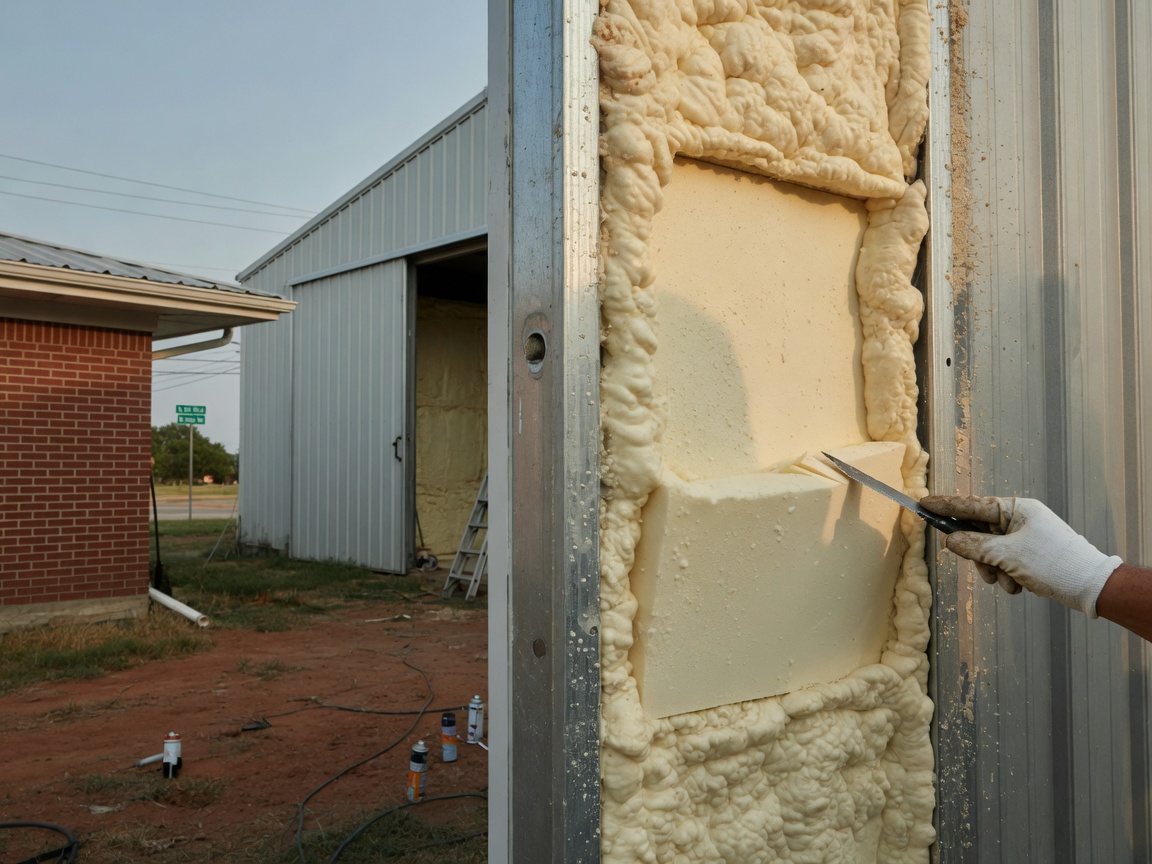
Closed cell spray foam insulation delivers durable moisture resistance and structural support for Tulsa homes and metal buildings exposed to warm humid summers, cold winters, and frequent severe thunderstorms across Tulsa County.
Performance in Tulsa's Variable Climate
Tulsa County experiences warm humid summers that drive moisture into building cavities and cold winters that create condensation risks on metal surfaces. Closed cell spray foam insulation creates a rigid barrier that limits vapor drive during those humid months while adding R-value that stabilizes indoor temperatures when winter lows hit. Crews working in areas like Cherry Street and Greenwood often encounter older homes with original framing that benefits from the foam's ability to seal around irregular surfaces without adding weight. In metal buildings near the BOK Center or along industrial corridors, the same material prevents corrosion by keeping water vapor away from steel panels during thunderstorm seasons. Application crews at 6549 E 46th St note that projects scheduled between Mon–Fri 8am–6pm allow full cure time before evening storms move through.
Benefits for Homes in Established Neighborhoods
Homes in Maple Ridge and Utica Square frequently feature balloon framing and uninsulated walls that allow air to move freely between interior spaces and the exterior. Closed cell spray foam insulation fills those cavities completely, reducing drafts that homeowners notice most during winter temperature swings. The material also adds minor structural rigidity to walls in older properties around the Pearl District where high winds accompany severe weather. Property owners in Brookside and Downtown Tulsa often combine it with attic work to create a continuous thermal envelope. Readers exploring options can compare closed cell versus open cell choices in the article Closed Cell vs Open Cell Spray Foam Insulation: Which Is Right for Your Tulsa Home?.
Application in Metal Buildings Across Tulsa County
Metal buildings in Jenks, Bixby, and Owasso serve as warehouses, workshops, and agricultural structures that gain the most from closed cell spray foam insulation on interior walls and roof decks. The foam adheres directly to steel without mechanical fasteners, creating an air seal that stops condensation from forming on the underside of panels during humid summer nights. In Broken Arrow facilities, contractors apply it to control temperature swings that affect stored equipment. The same product also works on roofs when paired with spray foam roofing systems for added waterproofing. Readers considering commercial projects can review details at Commercial Spray Foam Insulation.
Practical Installation Factors in Local Conditions
Terrain around Woodward Park and the Gathering Place includes clay soils that retain moisture after heavy rains, so closed cell spray foam insulation is often applied from the interior to avoid ground contact issues. Crews working Saturdays 9am–2pm can complete smaller residential jobs before weekend storms arrive. In metal buildings near the Tulsa Air and Space Museum or Route 66 Historical Village, surface prep includes cleaning oxidation so the foam bonds properly. The material also works well in crawl spaces beneath homes in Glenpool where humidity lingers year-round. Property owners in Sapulpa and Claremore see similar results when the foam is installed consistently across all surfaces rather than in isolated sections.