2026-10-01 · Paul Williams
Closed Cell vs Open Cell Spray Foam Insulation: Which Is Right for Your Tulsa Home?
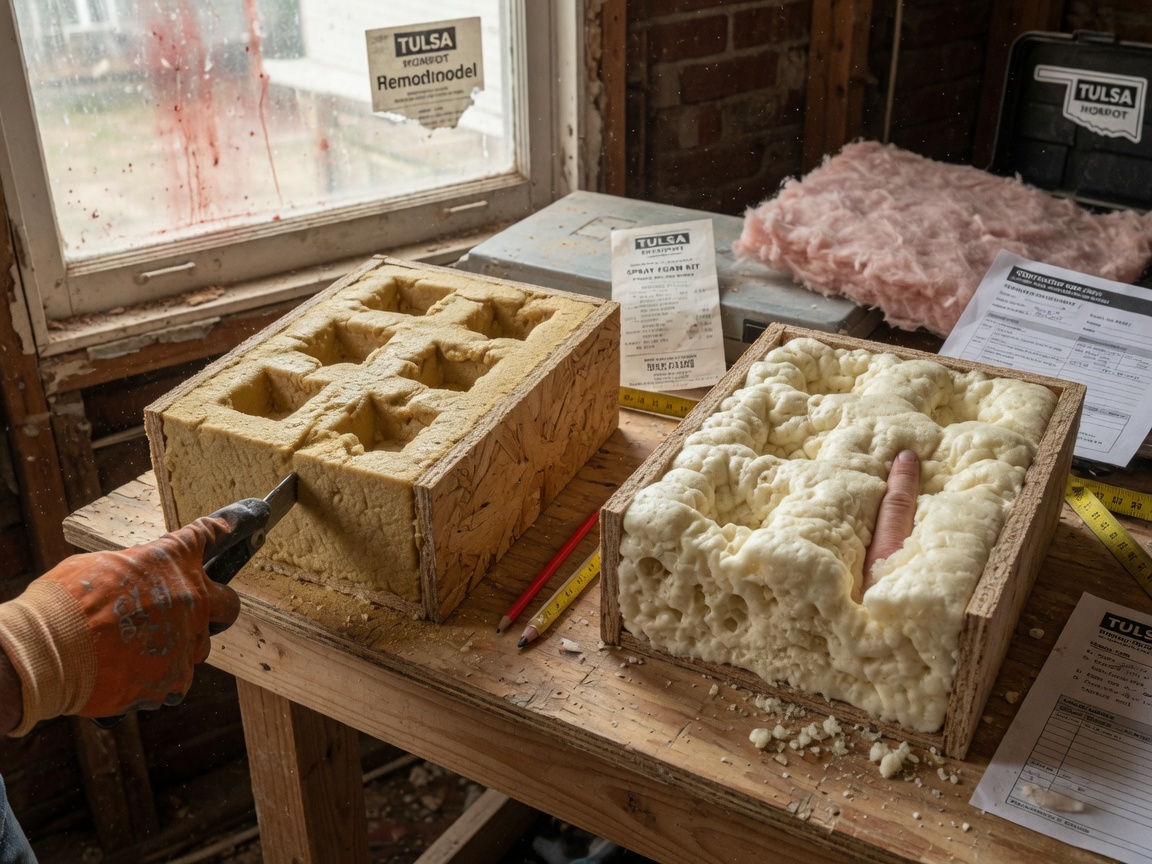
For most homes in Tulsa County, closed cell spray foam is the stronger choice when moisture resistance and added structural strength are priorities, while open cell spray foam suits ventilated attics where cost and sound dampening take precedence. Tulsa's frequent thunderstorms and wide temperature swings from humid summers to freezing winters make vapor barriers and air sealing performance decisive factors. Older neighborhoods such as Maple Ridge and Cherry Street often feature homes with balloon framing and limited attic access that reward closed cell's rigidity. Newer builds in Jenks or Bixby may lean toward open cell in roof decks where drying potential remains important. The decision hinges on the specific assembly, exposure to driving rain, and whether the space is conditioned or vented.
Understanding Closed Cell Spray Foam
Closed cell spray foam expands into a rigid, closed-pore structure that blocks both air and water vapor. In Tulsa County homes, this density adds roughly 20-30% to wall or roof racking strength, which helps during high-wind events common with severe thunderstorms. The material typically delivers R-6.5 to R-7 per inch, allowing thinner applications to reach code in attics over Maple Ridge bungalows. Because it adheres tightly to wood and masonry, it seals the many gaps found in 1950s-1970s construction around Utica Square and the Pearl District. Homeowners often pair it with attic insulation projects when converting unused space above Greenwood residences into conditioned rooms. The foam also resists the high humidity that lingers after summer storms, reducing condensation risk on ductwork in crawl spaces.
Understanding Open Cell Spray Foam
Open cell spray foam creates a softer, flexible matrix that allows some vapor transmission while still blocking airflow. This characteristic suits unvented attics in Bixby and Owasso homes where builders want the roof deck to dry toward the interior after heavy rain. At roughly R-3.6 per inch it costs less per board foot than closed cell, making it practical for large cathedral ceilings in newer Broken Arrow subdivisions. Sound absorption is noticeably better, which benefits properties near the BOK Center or Cain's Ballroom where traffic and event noise travel through older plaster walls. The material expands to fill irregular cavities without the pressure that can damage delicate lath-and-plaster in historic Maple Ridge homes. Readers interested in deeper open cell specifics can review open cell spray foam insulation pros, cons, and best uses in Tulsa.
How Tulsa Climate and Weather Patterns Influence Performance
Tulsa's warm humid summers push dew points into the 70s for weeks, while winter lows frequently drop below 20°F with wind-driven rain. Closed cell's low permeability prevents moisture from reaching sheathing during these cycles, which is valuable on north-facing walls in Brookside and Woodward Park neighborhoods. Open cell, by contrast, permits drying if a roof leak develops, an advantage in areas like the Route 66 Historical Village where older metal roofs still see occasional flashing failures. Thunderstorms can dump several inches of rain in hours; closed cell applied to rim joists in crawl spaces under Jenks homes keeps floodwater from wicking into floor systems. Both products must be installed when substrate temperatures stay above 40°F, limiting winter scheduling to heated interior work.
Cost and Long-Term Value Considerations
Installed prices in Tulsa County typically range from $1.10-$1.50 per board foot for open cell and $1.80-$2.40 for closed cell, depending on access and thickness. A 1,200-square-foot attic in an Owasso ranch might run $2,800-$4,200 for open cell versus $4,500-$6,800 for closed cell at two-inch thickness. Energy savings often appear within two to three years on homes with electric heat pumps, especially when paired with how much can spray foam insulation lower your Tulsa energy bills. Closed cell tends to deliver higher returns in conditioned crawl spaces beneath older Greenwood properties where humidity control prevents subfloor cupping. Open cell remains economical for soundproofing bonus rooms above garages in Bixby developments.
Practical Next Steps for Tulsa Homeowners
Walk the attic or crawl space with a contractor to identify whether the assembly is vented or unvented and whether existing insulation shows moisture staining. Measure current R-value and note any ice dam history on north slopes, common in Maple Ridge during cold snaps. Request a written proposal that specifies closed or open cell density, target thickness, and ventilation requirements. Homes in the Pearl District with balloon framing often need closed cell at the top plates to stop stack-effect air leaks. Properties near the Tulsa Air and Space Museum with metal roofs may favor open cell under the deck for drying capacity. Always verify the installer follows manufacturer temperature and humidity guidelines for Tulsa's variable spring and fall weather.