2026-10-01 · Paul Williams
What Is the Best Spray Foam Insulation for Tulsa Homes?
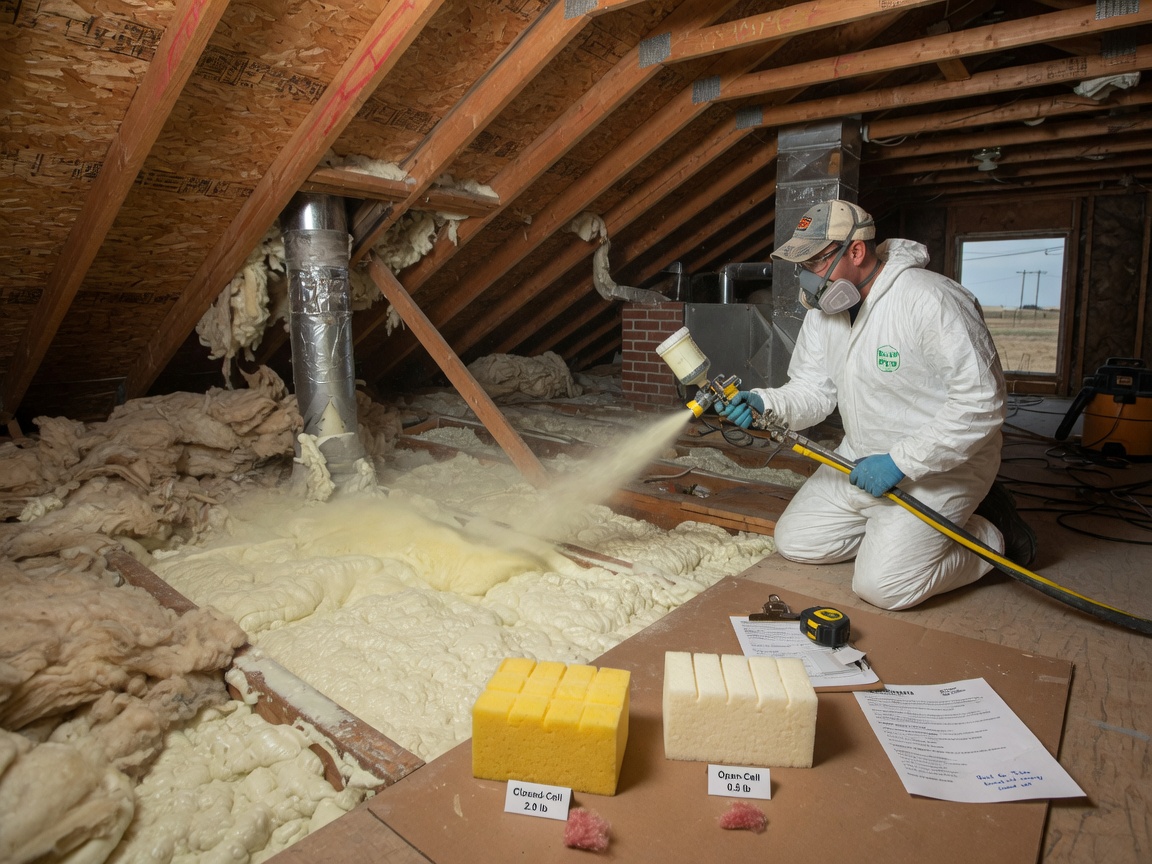
Closed-cell spray foam insulation is the best choice for Tulsa homes. It handles the area's warm humid summers, cold winters with frequent severe thunderstorms, and older housing stock better than open-cell alternatives or other insulation types. Homes in Tulsa County often feature crawl spaces, attics, and walls built before modern energy codes, where its higher density and water resistance prevent issues that arise during seasonal shifts.
Climate Demands in Tulsa County
Tulsa experiences temperature swings that stress insulation. Warm humid summers drive moisture into attics and walls, while winter cold increases heating loads. Severe thunderstorms add water intrusion risks around foundations in neighborhoods like Maple Ridge and Greenwood. Closed-cell spray foam creates a sealed barrier that limits air movement and condensation in these conditions. Installers working in Brookside and the Pearl District note fewer callbacks after retrofits because the material adheres directly to older plaster and brick surfaces common in pre-1960 homes. This performance holds across nearby cities such as Broken Arrow and Owasso where similar weather patterns apply.
Closed-Cell Advantages for Local Housing
Tulsa homes built between the 1940s and 1980s often have uneven cavities and limited access points. Closed-cell spray foam expands to fill these gaps while adding structural strength to roof decks and rim joists. Its R-value of 6.5–7 per inch allows thinner applications in tight attics found in Utica Square properties. Unlike open-cell foam, it resists water absorption during heavy rains that affect Bixby and Jenks crawl spaces. Readers comparing options can review the differences in detail at /blog/closed-cell-vs-open-cell-spray-foam-insulation-which-is-right-for-your-tulsa-home. The material also supports metal building retrofits common along Route 66 corridors.
Practical Installation in Tulsa Neighborhoods
Crews at 6549 E 46th St, Tulsa, OK 74145 schedule most residential jobs Monday through Friday 8am–6pm and Saturday 9am–2pm to match homeowner availability. In Downtown Tulsa and Cherry Street, access often requires interior protection and smaller equipment to navigate narrow alleys. Attic work in Maple Ridge homes typically takes one to two days and includes sealing around existing ductwork and recessed lights. For deeper guidance on attic projects, see /blog/spray-foam-attic-insulation-in-tulsa-is-it-worth-the-investment. Crawl space applications in Owasso and Glenpool benefit from closed-cell's ability to manage ground moisture without additional vapor barriers in many cases.
When Open-Cell or Other Options Fit
Open-cell spray foam works in some Tulsa applications where sound control matters more than maximum R-value, such as interior partition walls. However, its lower density and water absorption limit use in attics or below-grade areas exposed to thunderstorms. Blown-in cellulose remains an option for flat attic floors in newer Bixby subdivisions but settles over time and offers less air sealing. Homeowners evaluating full-home upgrades can compare closed-cell benefits for both residential and metal structures at /blog/closed-cell-spray-foam-insulation-benefits-for-tulsa-homes-and-metal-buildings. Site visits remain the only way to confirm which product matches each property's exact conditions.